When you hear “wisdom teeth removal,” it’s easy to picture a big procedure. So, is wisdom teeth removal a surgery every time? Not always—and the difference comes down to where the tooth sits and how easily we can access it. At Smiles for Health DDS, we evaluate each case with X-rays and a clear plan; therefore, you’ll know whether you need a simple extraction or a surgical extraction before we start.

Is Wisdom Teeth Removal a Surgery? Simple vs Surgical Extraction 🦷
Here’s the difference between simple and surgical extractions:
Simple Extraction ✅
This applies when the wisdom tooth has fully erupted through the gum line and is easily visible in your mouth.
Our dentist can typically grasp the tooth with forceps and gently loosen it from its socket, usually in one piece.
It’s a less invasive procedure, often performed under local anesthesia (just numbing the area), similar to getting a dental filling.
Recovery is usually quicker, with less swelling and discomfort compared to surgical extraction.
While still a dental procedure, this type of removal is generally not classified as full-blown “oral surgery” in the same way an impacted tooth removal is.

Surgical Wisdom Tooth Extraction: When Surgery Makes Sense 🛠️
You’ll need a surgical extraction when an impacted wisdom tooth sits under the gums, erupts partially, or angles into the jawbone.
To access the tooth, our dentist or oral surgeon needs to make an incision in the gum tissue.
Sometimes, we remove a small amount of bone that covers the tooth to create safe access. Often, we section the tooth into smaller pieces so we can remove it with less pressure on the jaw to be removed safely and efficiently, reducing trauma to the surrounding area.
Because this procedure involves more steps, we may recommend local anesthesia plus nitrous oxide, oral sedation, or IV sedation—depending on your case.Recovery from a surgical extraction is typically longer, with more noticeable swelling, pain, and activity restrictions.
So yes—is wisdom teeth removal a surgery often depends on whether incisions, bone removal, or tooth sectioning are needed. In practice, many wisdom teeth removals (especially impacted ones) fall into the surgical category.

Is Wisdom Teeth Removal a Surgery? What Happens During Surgical Removal 🧾
If you’ve been told you need a surgical wisdom tooth removal, it’s normal to feel a little nervous. Knowing the steps helps—because “unknown” is usually the scariest part.
Step-By-Step: Surgical Extraction Process 🔍
- Anesthesia and Sedation:
First, we’ll make sure you’re comfortable. Local anesthetic numbs the area so you don’t feel pain. Depending on complexity and your comfort level, nitrous oxide, oral sedation, or IV sedation may be recommended. - Incision (if necessary):
Once you’re numb, we make a small incision in the gum tissue to expose the tooth - Bone Removal (if necessary):
If bone covers the tooth, we carefully remove a small amount of bone to access the tooth. - Tooth Extraction (and Sectioning):
We loosen the tooth and remove it; however, when roots or angles make removal tricky, we section it to reduce force on surrounding tissue. - Cleaning the Site:
We clean the site and remove debris so no fragments remain. - Stitches (Sutures):
The gum is repositioned and sutured. Many sutures dissolve on their own, and gauze is placed to support clot formation.
Most surgical removals take about 20–60 minutes depending on complexity and how many teeth are involved.
When Does a Wisdom Tooth Require Surgical Extraction? 📌
You might be asking, “So when is it actually surgical?” Typically, it’s surgical when the tooth can’t come in normally—because access is limited or the tooth is trapped.
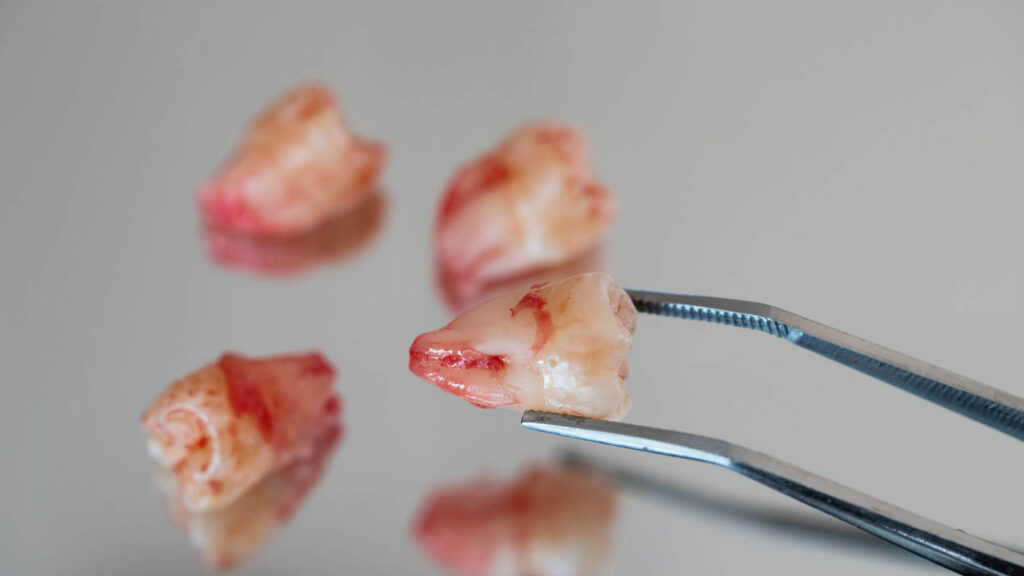
Sectioning a Wisdom Tooth During Surgery: Why Dentists Split the Tooth 🔪
- Impaction: The tooth doesn’t have room to erupt fully. It may be fully bony, partially bony, or soft tissue impacted.
- Bone involvement: If bone covers the tooth, we need a surgical approach to access it safely.
- Awkward angles: Mesial, distal, horizontal, or “vertical but stuck” positions often require sectioning.
- Symptoms or complications: Pain, infection (pericoronitis), damage to the second molar, or cysts may make removal necessary—even if symptoms started mild.
What Should You Expect During the Recovery from Surgery? 🧊
Recovery varies by person and complexity; however, most people follow a predictable pattern.
Wisdom Teeth Surgery Healing Time: Typical Timeline ⏳
The most intense phase is usually 3–7 days (when swelling and soreness are strongest).
Gums often close within 1–2 weeks, while bone remodeling can take longer—sometimes weeks to months.
Pain and Swelling After Wisdom Teeth Surgery: What’s Normal 💊
Discomfort is normal as numbness wears off. Pain often peaks around 24–48 hours; therefore, taking medication as directed helps you stay ahead of it. Most patients improve day by day after that.
Swelling 🧊
Swelling tends to peak around day 2–3. Ice packs during the first 24–48 hours help reduce swelling; afterward, swelling should gradually decrease.
Bleeding 🩸
Light oozing in the first 24 hours can be normal. Heavy bleeding that doesn’t improve after firm gauze pressure needs a call.
Activity Limits 🏃♂️
Rest for the first 24–48 hours, then return to light activity gradually. Avoid heavy lifting or intense workouts for at least a week (or as directed).
Diet & Hygiene 🍲🪥
Soft, cool foods first; avoid crunchy, spicy, or very hot foods. No straws early on. Gentle saltwater rinses after 24 hours help; meanwhile, careful brushing keeps the rest of the mouth clean.

How Much Does Surgical Wisdom Teeth Removal Cost? 💳
Cost depends on your specific situation, so an exam is the only way to give a precise estimate. That said, the main cost drivers are consistent:
What Changes The Price 📈
- Number of teeth: One vs four makes a difference.
- Complexity: Erupted teeth cost less; impacted teeth usually cost more due to surgical steps.
- Sedation choice: Local is simplest; nitrous, oral sedation, and IV sedation typically add cost.
- X-rays and consultation: Imaging is essential for safe planning.
- Insurance coverage: Plans vary; therefore, we’ll help you understand benefits and expected out-of-pocket costs.
If you want a clear, no-surprises estimate, schedule a consult at Smiles for Health DDS in Carlsbad. We’ll review your X-rays and walk you through options that fit your comfort and budget.

Are There Risks Associated with Wisdom Teeth Surgery? ⚠️
Surgical extractions are common and generally safe; however, it’s smart to understand potential risks.
Dry Socket After Wisdom Teeth Surgery: Risk and Prevention 🚨
- Pain and swelling: Expected, temporary, and manageable with guidance.
- Bleeding: Usually mild; persistent heavy bleeding needs attention.
- Dry socket: A common complication if the clot is disturbed; it causes significant pain and delays healing.
- Infection: Rare, but possible—watch for fever, worsening swelling, pus, or foul taste.
- Nerve irritation: Uncommon but more relevant for deeply impacted lower teeth near the nerve.
- Adjacent tooth damage: Rare, but possible near second molars or existing restorations.
- Sinus communication (upper teeth): Occasionally the upper roots sit near the sinus; most heal without issue.
- Jaw stiffness: Common early on and usually improves within 1–2 weeks.
Frequently Asked Questions
Is wisdom teeth removal a surgery in all cases?
Not always; however, it becomes surgery when it requires an incision, bone removal, or tooth sectioning. Therefore, impacted teeth are usually surgical.
What does surgical extraction of wisdom teeth involve?
Typically it includes numbing/sedation, a small gum incision, and sometimes bone removal; moreover, the tooth may be sectioned for safer removal.
How long does surgical extraction of wisdom teeth usually take?
Most cases take 20–60 minutes; however, timing depends on impaction depth and how many teeth are removed.
Is local anesthesia enough for surgical extraction of wisdom teeth?
Local anesthesia can be enough; that said, nitrous, oral sedation, or IV sedation may be recommended for comfort and complexity.
What risks are associated with wisdom teeth removal surgery?
Dry socket, infection, swelling, and temporary jaw stiffness are the most common; therefore, following post-op instructions lowers risk.
How should I prepare if my wisdom teeth removal is a surgery?
Plan a ride home if sedation is used; meanwhile, follow fasting/med instructions your dentist provides. Therefore, your appointment stays safe and smooth.
What is the typical recovery like after surgical extraction of wisdom teeth?
The toughest days are usually 2–4; however, most people feel noticeably better within a week. Therefore, rest, soft foods, and gentle care matter.