Real Causes and Effective Solutions
During the day, tooth pain at night might come and go unnoticed among conversations, work, or distractions. But as soon as night falls and the world goes quiet, that pain seems to turn up the volume. You’re not imagining it — it’s a mix of biology, posture, and stress that explains why dental pain often feels worse when you’re trying to rest.
Dentists at Smiles for Health DDS in Carlsbad, California, explain that when you lie down, blood flow increases to the head. This small postural change builds pressure in inflamed tissues, amplifying pain. If you have a deep cavity, gum inflammation, or infection, that added pressure can feel like a pulsing heartbeat in your tooth.
Another factor that’s often overlooked: at night, your body produces less saliva. Saliva is your natural defense system — it washes away bacteria and balances mouth acidity. With less saliva, bacteria thrive, worsening irritation and pain.
And don’t forget about stress. Fatigue, anxiety, and daily tension can cause bruxism — the unconscious habit of grinding your teeth while you sleep. The result? Muscle soreness, enamel wear, and, in many cases, tooth pain at night that keeps you awake.

😣 Why Tooth Pain at Night It Feels Worse When You Lie Down
When your body relaxes, your attention sharpens. Without distractions, you finally notice what your body’s been trying to tell you all day. It’s your mind saying, “Now that you’re still, pay attention.” That’s why tooth pain at night doesn’t just hurt physically — it affects your rest, your mood, and your emotional balance.
🧩 Most Common Causes of Nighttime Tooth Pain
- Deep cavities: inflame the dental pulp and increase inner pressure.
- Infections or abscesses: cause throbbing pain and swelling.
- Bruxism: wears down enamel and leads to sensitivity.
- Receding gums: expose roots, making teeth more reactive to temperature changes.
- Sinus pressure: often radiates pain to the upper teeth.
- Impacted wisdom teeth: push against nearby nerves, creating deep aches.
👉 Quick tip: if you feel pulsing pain that spreads to your head or worsens when chewing, don’t wait for it to “go away.” It’s a sign that something deeper needs professional attention.
💡 Real Relief That Works
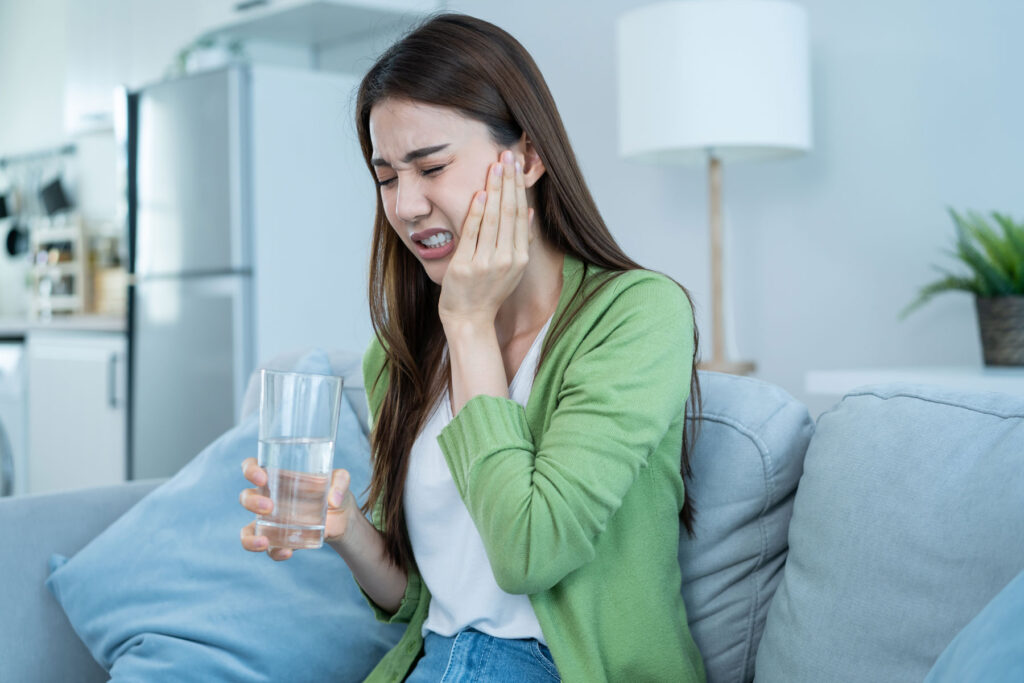
Nobody wants to stay up all night because of tooth pain at night. Before you reach for random painkillers, try these safe, dentist-approved tips:
- Apply a cold compress to your cheek for 10–15 minutes to reduce inflammation.
- Sleep with your head slightly elevated. Use an extra pillow to reduce pressure.
- Avoid hard, hot, or sugary foods before bed.
- Rinse with warm salt water — a natural anti-inflammatory remedy.
- Avoid direct heat: it can worsen swelling if there’s an infection.
- See your dentist if tooth pain at night lasts more than 24 hours or wakes you up repeatedly.
Painkillers may offer temporary relief, but they don’t fix the cause. Prompt professional treatment stops the issue at its source and prevents further infection or costly procedures.

🌿Prevention: The Smartest Way to Avoid Nighttime Tooth Pain
Healthy smiles aren’t built overnight. They come from daily consistency and mindful habits:
- Brush after every meal for at least two minutes.
- Floss daily to remove hidden debris.
- Use an antibacterial mouthwash before bedtime.
- Schedule dental checkups every six months.
- Eat foods rich in calcium, magnesium, and vitamin D.
- Manage stress through deep breathing or mindfulness.
- If you grind your teeth, ask your dentist about a protective night guard.
These simple habits can make the difference between restful sleep and another night of tooth pain at night.

🦷 In Summary
Tooth pain at night is your body’s way of signaling that something deeper needs attention. It might start as a dull ache, but left untreated, it can develop into an infection that affects your overall wellness.
At Smiles for Health DDS, we combine advanced dental technology with a wellness-focused, human approach. Every smile deserves comfort, confidence, and lasting health — and our team is here to help you achieve that.

🦷 If your nights are filled with pain instead of peace, it’s time to take care of your smile.
Frequently Asked Questions
How to stop wisdom tooth pain quickly at home until I see a dentist?
Cold compresses, saltwater rinses, and OTC pain relievers can help fast; however, they only calm symptoms, not the cause.
What are the safest methods of wisdom tooth pain relief during pregnancy?
Saltwater rinses and cold compresses are usually safest; therefore, avoid new medications unless your OB and dentist say it’s okay.
How to stop wisdom tooth pain if the gums are swollen?
Use anti-inflammatory medication if you can take it, plus warm saltwater rinses; as a result, swelling often eases temporarily.
Are antibiotics part of wisdom tooth pain relief?
Sometimes, especially if infection is present; however, antibiotics support healing but you still need a dental exam to treat the source.
Why does chewing food make me wonder how to stop wisdom tooth pain?
Chewing can press on inflamed gum tissue or an impacted tooth; consequently, the area feels more tender and reactive.
What foods should I avoid while seeking wisdom tooth pain relief?
Avoid hard, crunchy, spicy, or sticky foods; instead, choose soft options so you don’t aggravate the gum flap.
How long do remedies for impacted wisdom tooth usually provide relief?
Home relief often lasts only a few hours; therefore, persistent pain usually means it’s time for an in-office evaluation.
What does Smiles for Health DDS recommend as permanent remedies for impacted wisdom tooth?
If the tooth is impacted or repeatedly infected, removal is often the best long-term fix; in other words, it ends the cycle instead of chasing symptoms.