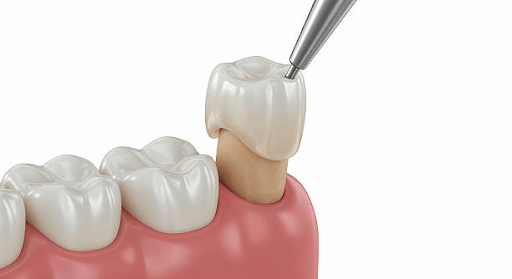
When people ask,what is a crown for teeth, the simplest answer is: a crown is a custom-made “cap” that covers and protects a damaged tooth while restoring shape, strength, and function. At Smiles for Health DDS, we often recommend a crown when a filling won’t hold up long-term; therefore, you get stability now and fewer surprises later.
🛡️🦷 What Is a Crown for Teeth? The Dental Crown Purpose in Plain English
In fact, what is a crown for teeth often comes up when a tooth needs more protection than a filling can provide.A crown covers the visible part of your tooth above the gums and acts like a protective shell.
🧩🔒 What Is a Crown for Teeth and How Does It Work?
- Structure: A crown is fixed in place with dental cement; in other words, you don’t remove it at home.
- Coverage: It protects weak enamel and supports the tooth during chewing.
- Placement: We shape the tooth, take precise measurements, and secure the final crown for a comfortable bite.
🧱✨ Dental Crown Materials: Porcelain, Zirconia, and More
- Porcelain/Ceramic: Natural look; great for visible teeth.
- Zirconia / E.max: Strong + aesthetic; often a top pick for modern crowns.
- Metal or PFM: Durable options, usually for back teeth depending on your bite and goals.
In fact, what is a crown for teeth often comes up when a tooth needs more protection than a filling can provide.
🧠🦷 Why Get a Tooth Crown? When a Crown Makes More Sense Than a Filling
You may need a crown when your tooth needs full coverage support—not just a patch.
✅🦷 When Do You Need a Crown for Teeth? Common Signs
- Large decay or a big old filling that weakens the remaining tooth
- A cracked or fractured tooth that needs reinforcement
- After a root canal to protect a brittle tooth
- Severe wear from grinding that changes bite and comfort
- Cosmetic correction when whitening or bonding won’t deliver the result
🧾🦷 How Is a Dental Crown Placed? Step-by-Step Crown Placemen
Most crown cases take two visits; however, the process feels very straightforward when you know the flow.
🪥📍 Crown Prep and Temporary Crown: What Happens in Visit 1
- We numb the area and shape the tooth to fit the crown comfortably.
- We take an impression/scan and place a temporary crown; therefore, your tooth stays protected while the lab creates the final.
🏁✨ Final Crown Fit and Cement: What Happens in Visit 2
- We remove the temporary crown and test fit the final crown for comfort and bite.
- Once everything feels right, we cement it in place and refine the bite as needed.
⏳🦷 How Long Do Dental Crowns Last? Crown Lifespan and Care
A crown can last many years; however, durability depends on material, bite forces, and habits.
🔧✅ Crown Care Tips: Habits That Help Crowns Last Longer
- Brush and floss daily; therefore, the crown margin stays clean and stable.
- Avoid chewing ice and hard candy; in other words, don’t stress the edge of the crown.
- Address grinding with a night guard; as a result, you reduce wear and fractures.
- Keep regular exams so we can catch small issues early.
🌟🦷 What Is a Crown for Teeth Used For? Benefits You Can Feel ✅
A crown does more than “cover” a tooth—it helps you chew comfortably and protect yourlong-term oral health. When patients ask what is a crown for teeth, this “protect-and-restore” role is the biggest reason.
💪🧡 Dental Crown Benefits: Strength, Comfort, and Confidence
- Protection: Shields a weak tooth from breaking.
- Function: Restores chewing confidence and bite comfort.
- Appearance: Matches your smile when you choose tooth-colored materials.
- Stability: Helps avoid bigger repairs later; therefore, it’s often a smart preventive move.
Ready to find out whether a crown is the right next step? Schedule a visit at Smiles for Health DDS in Carlsbad—so we can evaluate your tooth, explain options clearly, and help you protect it for the long run.
Frequently Asked Questions
Crown vs filling: how do I know which I need?
A filling repairs small areas; however, a crown covers and strengthens a tooth with major damage. Therefore, crowns work better when the tooth needs full support.
Does getting a crown hurt?
Most patients feel pressure, not pain; moreover, we numb the area fully for comfort. Therefore, the appointment is usually very manageable.
Which crown material looks the most natural?
Porcelain and advanced ceramics often look the most natural; in addition, we shade-match carefully. Therefore, crowns can blend seamlessly with your smile.
How long does it take to get a crown?
Many cases take two visits over 1–2 weeks; however, timing varies by lab and complexity. Therefore, we’ll confirm your timeline at your exam.
Can a crown fall off?
It’s not common; however, old cement, decay, or bite stress can loosen it. Therefore, call us quickly so we can reseat or replace it safely.
Do I need a crown after a root canal?
Often yes; in other words, the tooth can become more brittle afterward. Therefore, a crown helps prevent fractures during chewing.
How do I care for a crown at home?
Brush and floss like normal; moreover, clean the gumline carefully. Therefore, daily habits protect the crown edge and the tooth underneath.