

Do Teeth Whitening Strips Work? (What to Expect + Safety Tips) ✨
Ever seen someone with a bright, white smile and wonder how they got it? While professional whitening treatments might be their secret weapon, there’s a more accessible option available as well.But do teeth whitening strips work? Let’s brush aside the mystery and break down what these handy strips can (and can’t) do with Smiles For Health. 😁
Understanding Teeth Stains and Whitening 🦷
Before diving into strips, let’s look at the two main culprits behind stained teeth.
Types of Teeth Stains
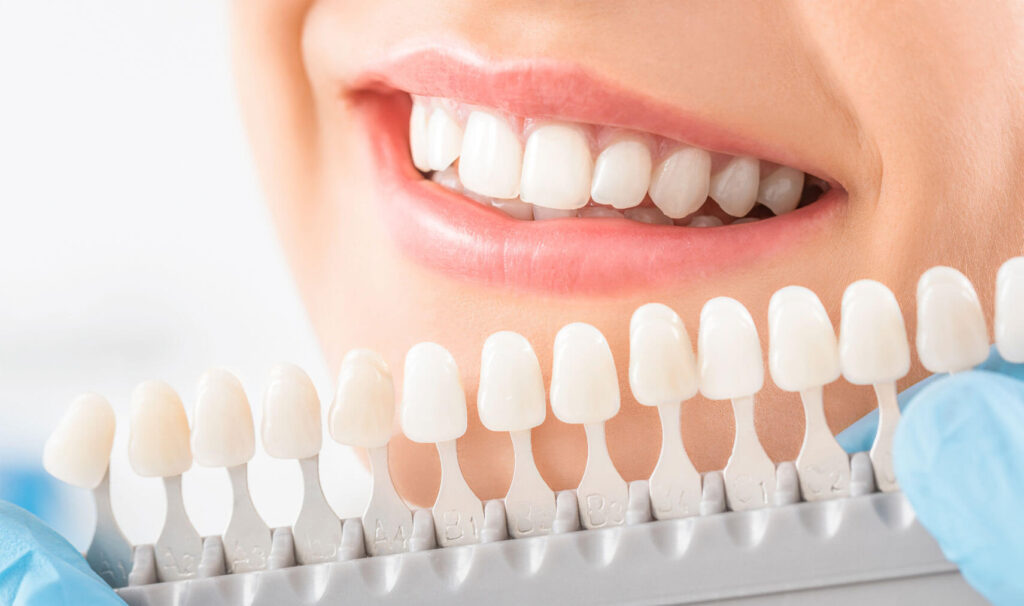
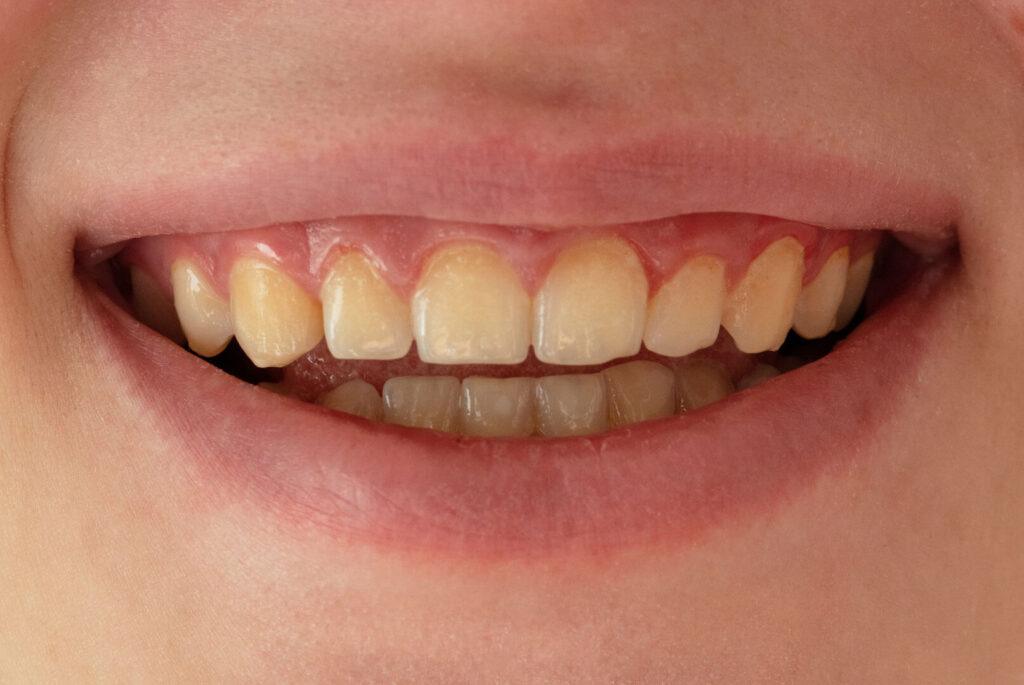
- Extrinsic Stains: These are surface stains from daily habits like coffee, red wine, dark berries, and smoking. They cling to enamel (the outer layer).
- Intrinsic Stains: These stains develop inside the tooth. Genetics, certain medications (like tetracycline), or excess fluoride exposure during childhood can contribute.
How Teeth Whitening Works (Chemical Breakdown of Stains)
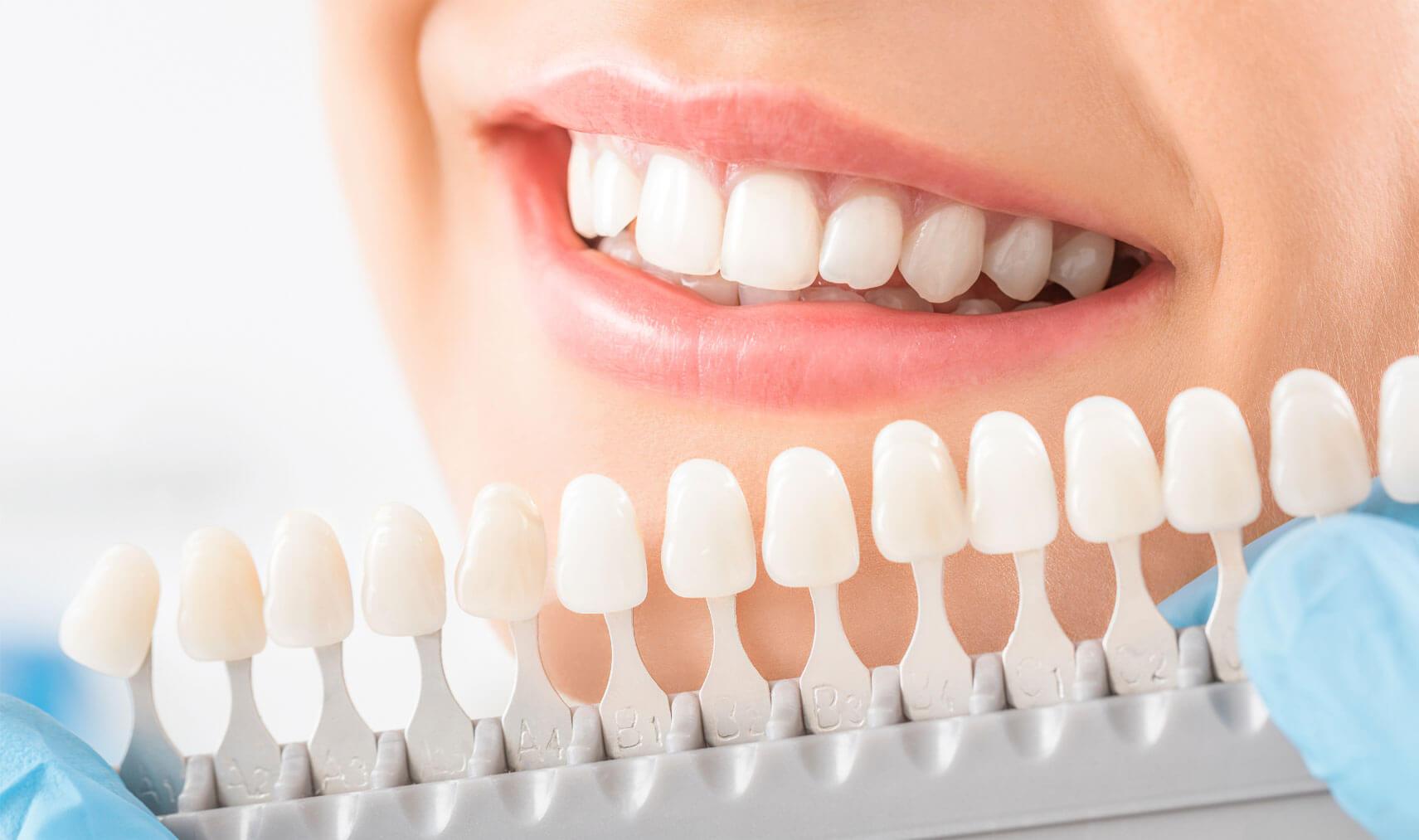
Whitening products (including strips) use peroxide-based agents like hydrogen peroxide or carbamide peroxide. As a result, they break down stain molecules so teeth look brighter.
Teeth Whitening Strips Explained ✅
These thin, flexible strips come coated with whitening gel. You place them on your teeth, press gently, and let the active ingredients do the work.
How Do Teeth Whitening Strips Work? (Do Teeth Whitening Strips Work in Real Life?)
- Application: Follow your brand’s directions. Typically, you wear strips for about 30 minutes daily for 1–2 weeks.
- Active Ingredients: Strips rely on peroxides, usually at lower concentrations than in-office treatments. Therefore, they tend to work more gradually over time.
Benefits of Using Teeth Whitening Strips ✨
- Convenience: Whiten at home on your schedule.
- Cost-Effectiveness: Strips are generally more affordable than professional whitening; therefore, they’re a budget-friendly option for gradual results.
- Simple routine: You can build it into your week without major lifestyle changes.
Limitations of Teeth Whitening Strips ⚠️
- Strength of Ingredients: Lower peroxide levels mean slower, subtler results compared with professional options.
- Uneven Application: Curved teeth, crowding, or gaps can lead to less even whitening.
- Not ideal for every stain: Strips typically perform best on extrinsic stains.
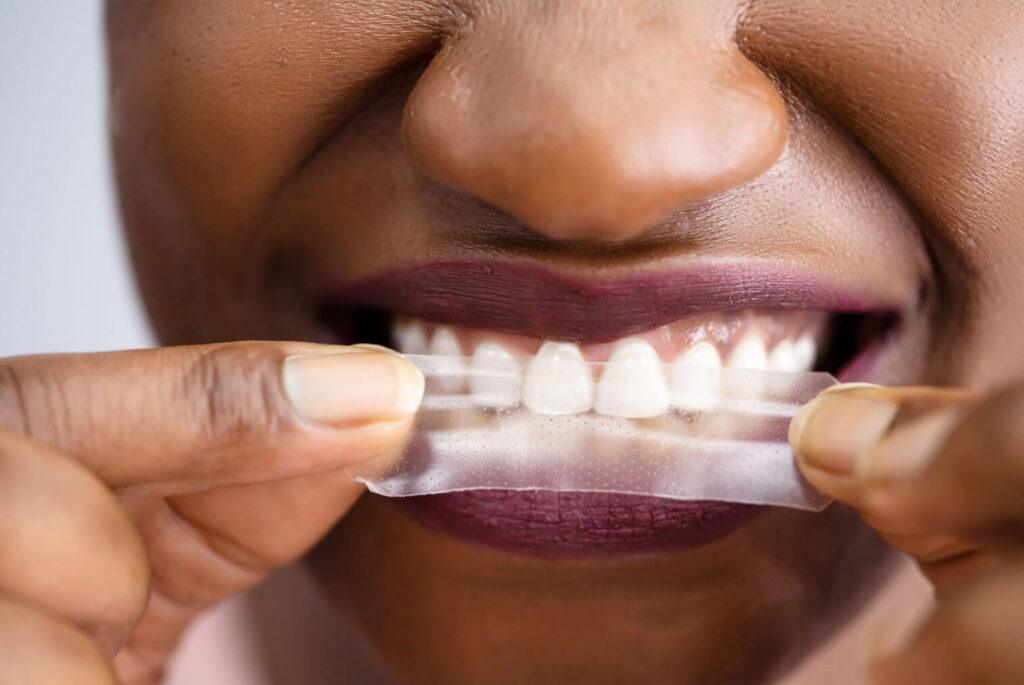
Effectiveness of Teeth Whitening Strips (Do Teeth Whitening Strips Work?) 😁
So, do teeth whitening strips work? Yes—especially for surface stains and mild discoloration. However, results vary depending on stain type, habits, and consistency.
Research on Effectiveness
Clinical research supports peroxide-based whitening as effective under appropriate conditions.
Realistic Expectations
Don’t expect a movie-star transformation overnight. Instead, many people see noticeable changes within about two weeks when they use strips consistently.
Individual Factors Affecting Results
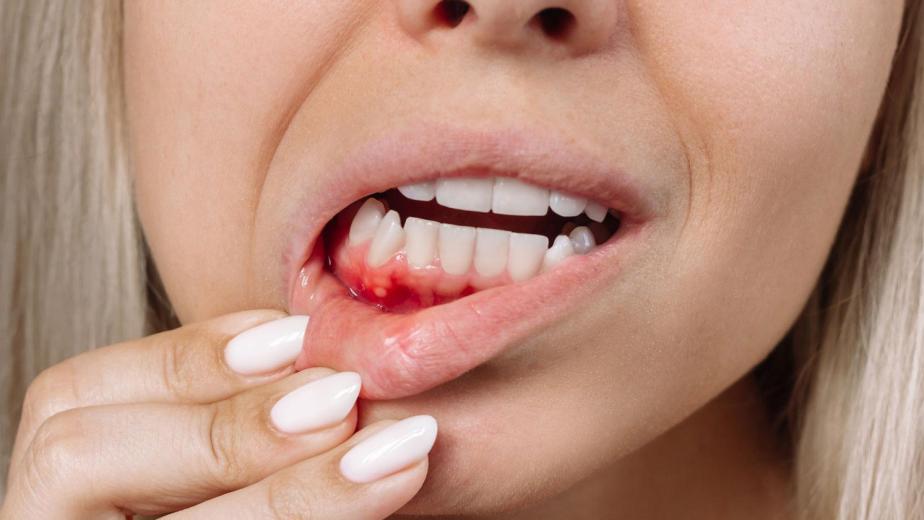
Some people feel temporary sensitivity or gum irritation. If you already have sensitive teeth, talk to your dentist before starting so you can choose a safer approach.
Safety Considerations 🛡️
Ingredients and Potential Side Effects
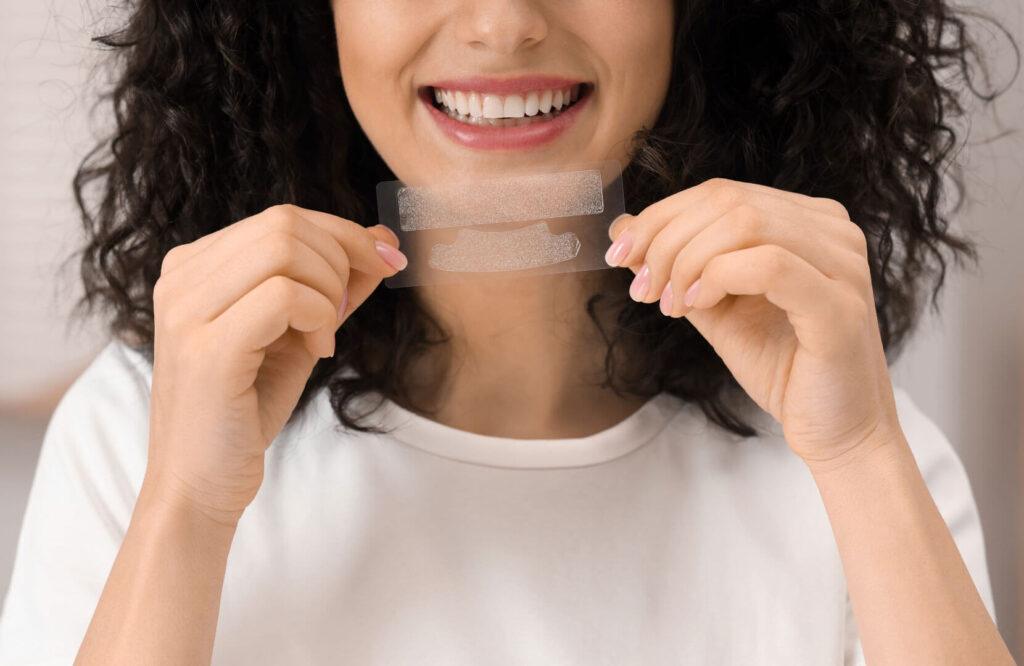
The most common side effects include mild gum irritation and tooth sensitivity. In most cases, they fade after you stop or pause treatment.
Importance of Proper Use
Always follow directions. Most importantly, don’t overuse strips—overdoing it can irritate gums and may damage enamel over time.
Consulting a Dentist Before Use
If you have existing dental issues, worn enamel, or dental work (crowns/veneers), check in with your dentist first. That way, you avoid uneven color and unnecessary sensitivity.
Comparing Teeth Whitening Options 🧾
Teeth Whitening Strips vs. Whitening Toothpaste
- Effectiveness: Strips usually create more noticeable whitening than toothpaste, since toothpaste mainly lifts surface stains.
- Maintenance: Both require consistency; however, strips often need fewer touch-ups once you reach your shade.
Teeth Whitening Strips vs. Professional Whitening
- Strength: Professional whitening uses higher peroxide concentrations for faster, more dramatic results.
- Cost: Professional whitening costs more, but it can deliver a bigger change and more even results.
Choosing the Right Option
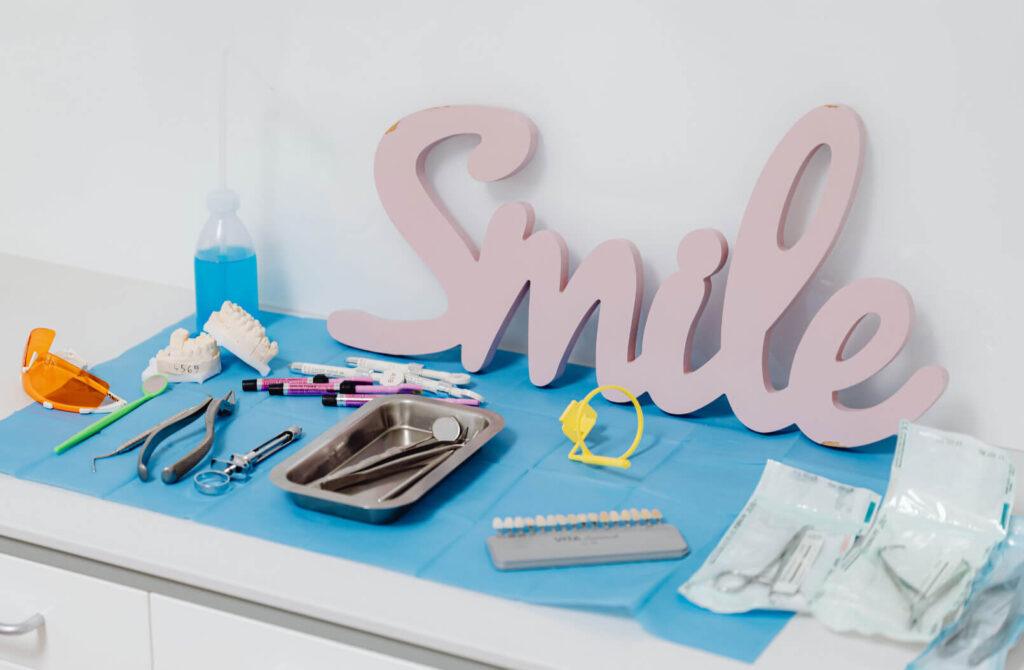
Consider your desired whitening level, budget, and sensitivity when choosing. For a subtle yet convenient option, strips might be ideal. For a dramatic and longer lasting transformation, professional treatments could be the answer. Smiles for Health can help you find the perfect whitening solution for your needs.
Maintaining a White Smile 🪥
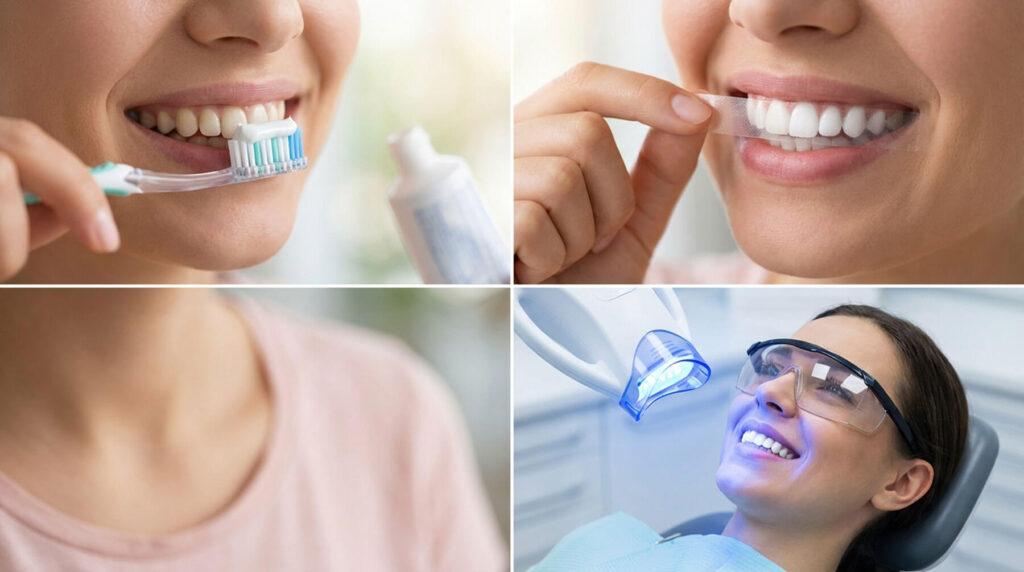
Teeth whitening strips can help you brighten your smile; however, maintenance keeps your results looking fresh for longer.
Lifestyle Habits Affecting Teeth Stains
Limit stain-heavy foods and drinks (coffee, red wine, curries). In addition, quitting smoking supports both a brighter tooth color and healthier gums.
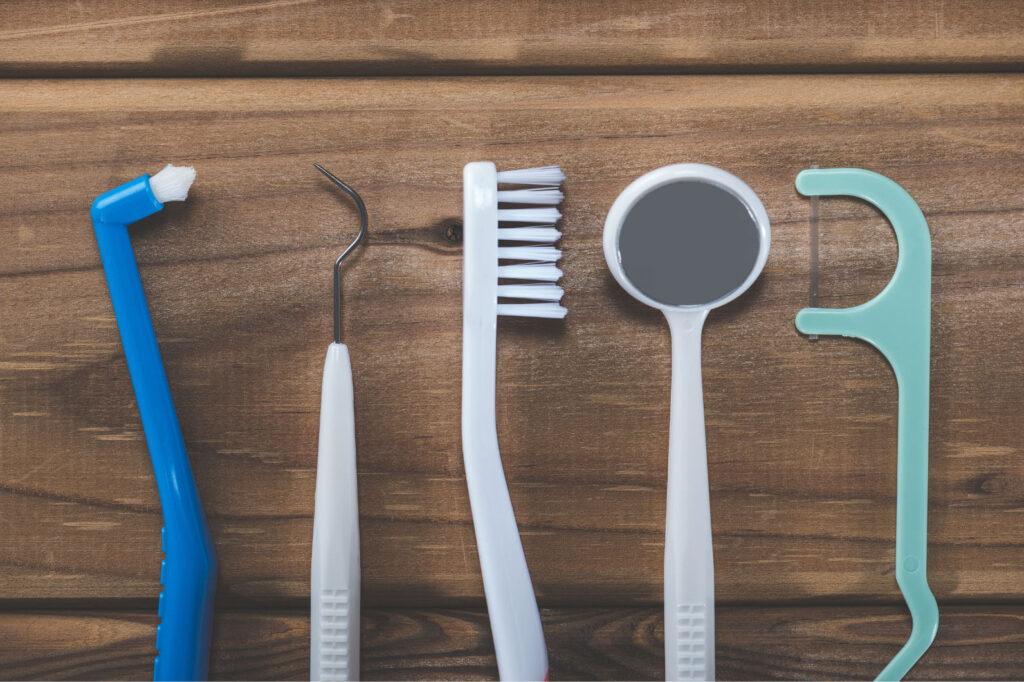
Brushing and Flossing for Whiter Teeth (Importance of Oral Hygiene)
Brush twice daily and floss once a day. As a result, you reduce plaque that can trap stains and make enamel look dull. Moreover, consistent hygiene helps your whitening results last.
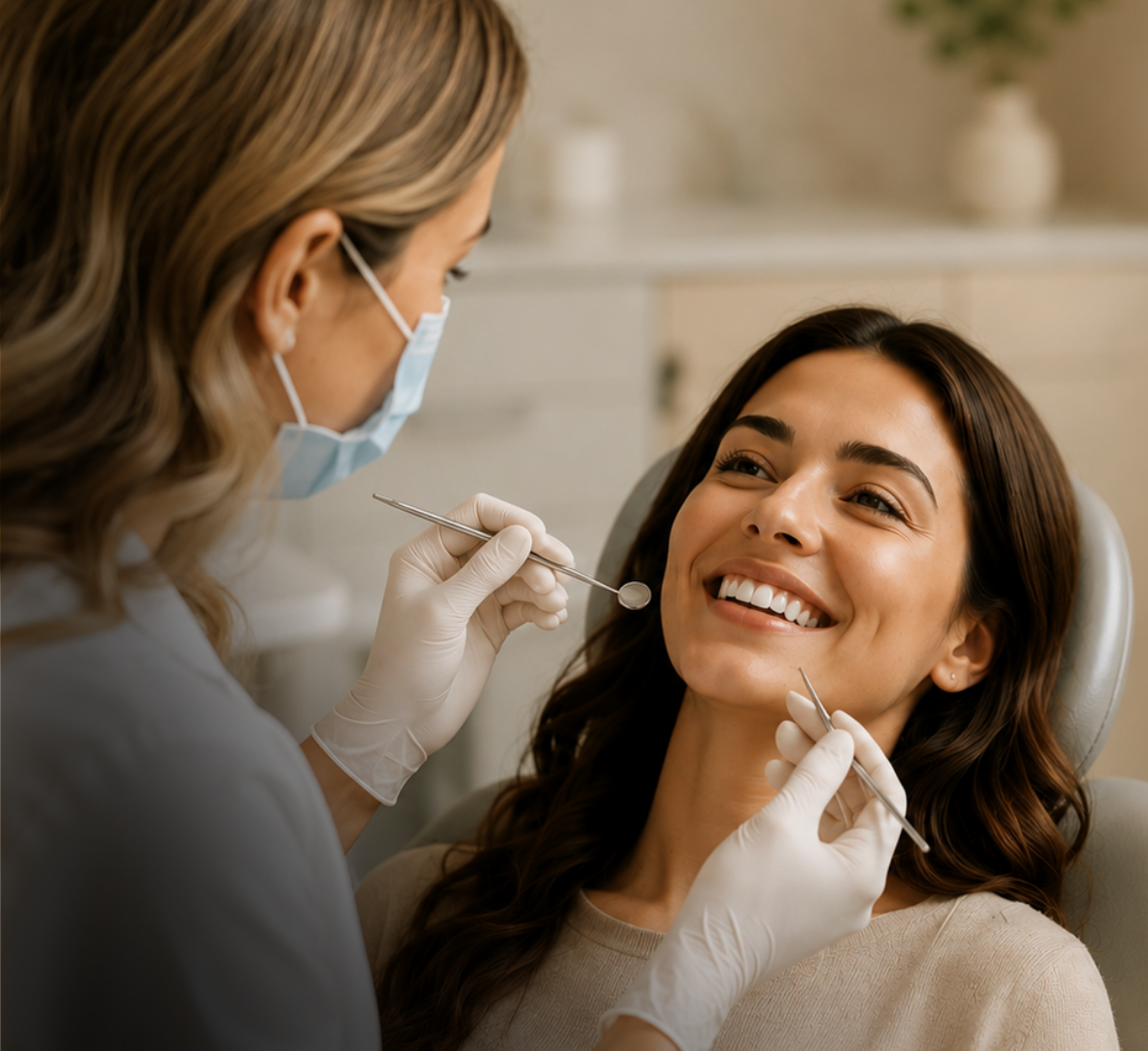
Regular Dental Checkups (Professional Cleaning and Advice)
Schedule routine cleanings for stain removal and personalized whitening guidance. That way, you maintain a brighter smile and catch small issues early.
DIY vs. Professional Whitening: Weighing the Options ⚖️
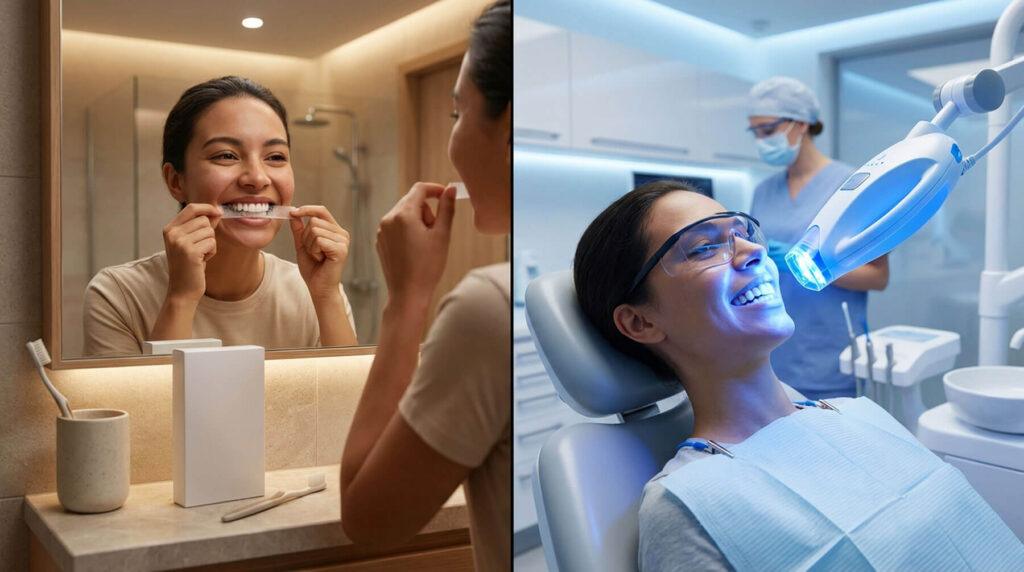
While strips offer convenience and affordability, professional whitening often delivers faster, more dramatic results.
DIY Whitening Strips
- Pros: Convenient, affordable, widely available.
- Cons: Slower results, possible uneven whitening, may not suit sensitivity or deep stains.
Professional Whitening
- Pros: Faster results, more even whitening, supervised care.
- Cons: Higher cost, requires appointments.
Choosing the Right Option - Consider your goal shade, budget, and sensitivity. If you want subtle brightening, strips may fit.
- If you want a bigger change, professional whitening may be the better match.
Smiles for Health: Your Partner in Oral Health and Happiness 💛
At Smiles for Health, we help you build a healthy, confident smile with preventive care, cleanings, restorative dentistry, and cosmetic options—including whitening support. So, whether you want a simple refresh or a bigger transformation, we’ll guide you to the safest plan for your teeth.
Are Teeth Whitening Strips Right for You? ✅
So, do teeth whitening strips work? Yes—they can brighten teeth a few shades, especially for surface stains, when you use them correctly. However, they’re not ideal for everyone.
Also, If you have deep stains, significant whitening goals, or dental concerns, professional whitening may fit better. Either way, Smiles for Health can recommend the best option for your smile.
📣 Ready to unlock your brightest smile? Schedule a whitening consult today!